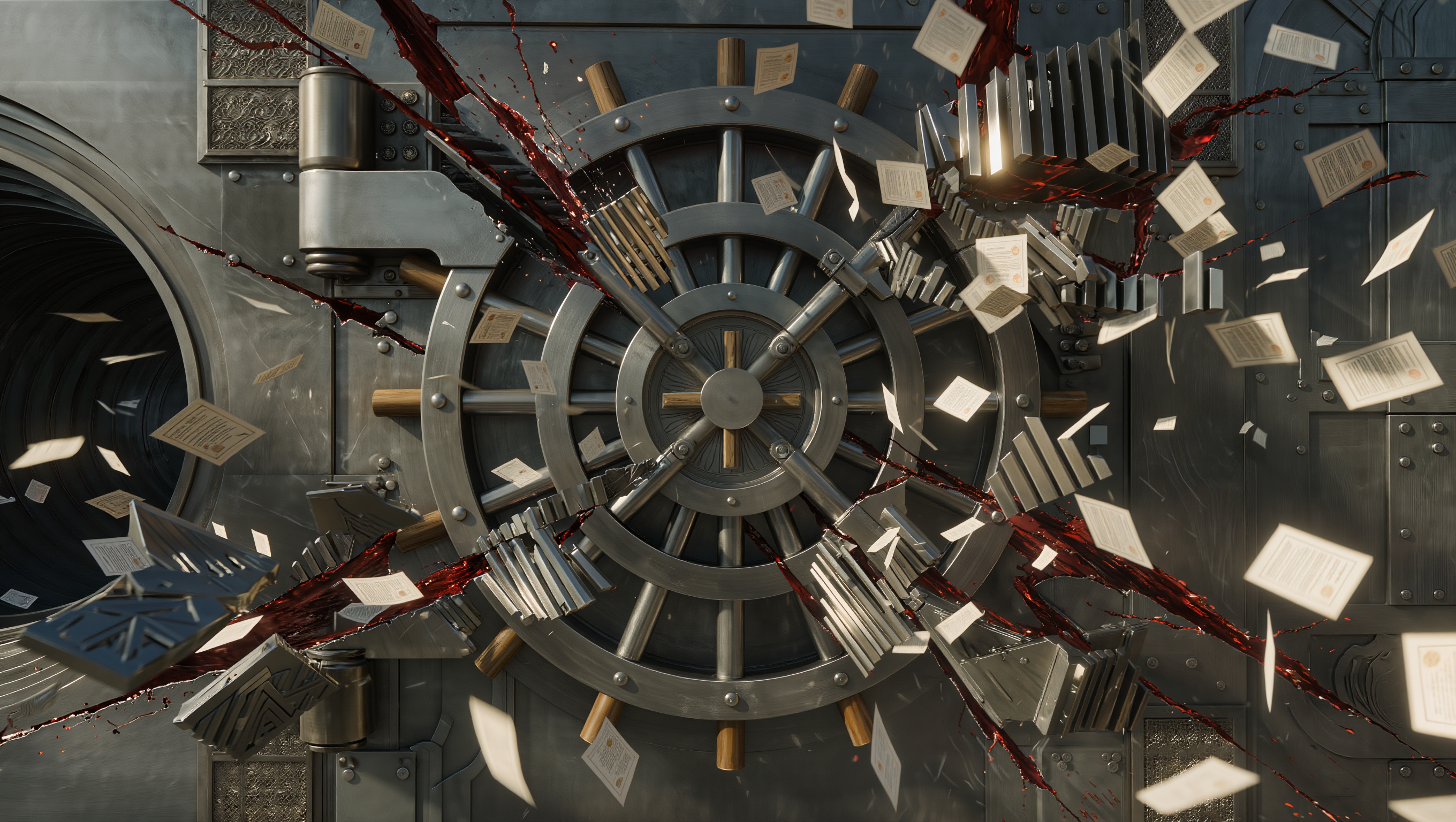
There's a word ricocheting around trading floors this month. A word so ugly it could only have been coined by someone watching their positions bleed out in real time. *SaaSpocalypse*. It sounds like something from a bad sci-fi novel. Unfortunately for the holders of software stocks, it's playing out on their Bloomberg terminals right now.
Let's set the scene. In the space of six weeks, a cascading series of AI product launches has turned market consensus on its head. The narrative used to be simple: artificial intelligence would lift all boats, especially the software boats already riding the digital wave. That story is dead. The new story is far more brutal — AI isn't just coming for blue-collar jobs. It's coming for the companies that sell the tools white-collar workers use every day.
And the market's response has been utterly indiscriminate.
The Dominoes Fall
It started with Anthropic's Claude Cowork. On January 31st, the AI startup released open-source plugins allowing its AI assistant to handle legal contract review, marketing campaigns, and financial analysis — tasks that have long been the bread and butter of some of the world's most profitable software and data companies.
The reaction was instantaneous. RELX, the FTSE 100 information analytics giant whose LexisNexis division has been embedded in law firms for decades, saw its shares crater 14% in a single day. Its premium valuation — 29.6 times earnings just a year ago — has been slashed to 15.4 times, its cheapest in twelve years. Wolters Kluwer, its Dutch peer, dropped over 10%. Thomson Reuters plunged 16%. LegalZoom was hammered 20%.
Then Google unveiled Project Genie on January 29th, an experimental AI tool that generates interactive 3D worlds from text prompts. Never mind that the tool produces 60-second experiences at 720p and 24 frames per second with roads that occasionally forget they're supposed to be roads. Investors sold first and asked questions never. Unity Software collapsed 24% in a day. Roblox shed 13%. Take-Two Interactive, the company behind Grand Theft Auto, lost over $3.5 billion in market capitalisation in a single session. Even Nintendo took a 5% hit.
The S&P North American Software Index recorded a 15% decline in January — its worst month since October 2008. The iShares Expanded Tech-Software Sector ETF is down roughly 25% year to date. An estimated $285 billion in market value evaporated from software stocks in 48 hours during the first week of February.
"We call it the SaaSpocalypse," said Jeffrey Favuzza at Jefferies' equity trading desk. "Trading is very much 'get me out' style selling."
He wasn't exaggerating.
This Week: The Fire Spreads
If you thought the carnage was limited to software, this week delivered a sharp correction to that assumption.
On Monday, Insurify — a privately held online insurance platform — launched an AI shopping agent that can scan millions of quotes in seconds. The S&P 500 Insurance index posted its biggest single-day drop since October. Willis Towers Watson suffered its worst trading session since November 2008, closing down 12%. Arthur J. Gallagher fell 9.9%. Aon dropped 9.3%.
The fear crossed the Atlantic by Tuesday. In London, Mony Group — owner of MoneySuperMarket — crashed 13% to a thirteen-year low after reports emerged that insurance quotes were now available directly inside ChatGPT. Spanish insurer Tuio had gained approval to provide home insurance quotes through the chatbot. Admiral, the UK motor insurer, had already seen £1.3 billion erased from its market value in January after AI insurer Lemonade launched cover for autonomous vehicles at half the price of traditional policies.
Then came the wealth managers. Los Angeles-based startup Altruist launched a tax-planning tool within its Hazel AI platform, claiming it could generate personalised tax strategies by reading clients' tax returns, payslips, and account statements within minutes. On Wall Street, Raymond James fell 8.7% — its worst day since March 2020. Charles Schwab sank 7.4%. LPL Financial lost 8.3%.
In London this morning, St James's Place — Britain's biggest wealth group — plunged 11.25%. AJ Bell dropped nearly 6%. Quilter, Rathbones, Schroders, and Jupiter Fund Management all fell. Even Man Group, the quantitative hedge fund manager, shed 2.8%.
And today, French software titan Dassault Systèmes reported disappointing guidance and saw its shares collapse over 20% — its worst day *ever* — wiping approximately €6 billion from its market value. JPMorgan analysts noted the results were "worse than even the most negative had feared in an unforgiving software tape."
The pile of potential losers, as one analyst put it, is mounting up. The speculation about which sector gets hit next is rife.
Buy the Hard Stuff
Here's where things get interesting. Because while the SaaSpocalypse has been torching anything with a subscription model and a P/E ratio above 20, something else has been happening in markets. Something rather old-fashioned.
Investors have been buying stuff you can touch.
The FTSE 100 punched through 10,000 for the first time in January, powered not by technology stocks but by miners, oil majors, and pharmaceutical companies. Today, as St James's Place sits at the bottom of the index, the top of the leaderboard is occupied by Antofagasta, Anglo American, Rio Tinto, and Fresnillo — all lifted by surging commodity prices. Gold is trading above $5,050 an ounce.
The pattern is striking. Look at the best FTSE 100 performers over the past month, and you'll find mining stocks, big pharma companies like AstraZeneca, engineering group Weir, and chemicals company Croda. The Stoxx Europe 600 Basic Resources index has outperformed the software index by a staggering margin. Copper hit record highs in January. Silver and platinum have rallied hard.
The logic is simple enough. AI doesn't run on dreams. It runs on electricity — vast, growing quantities of it. Data centres need copper for wiring, lithium for batteries, and rare earths for the hardware. The infrastructure buildout that underpins the AI revolution is real, it's physical, and it requires things that come out of the ground.
Buy tangibles, sell intangibles. Buy the real, sell the virtual. Buy hard stuff, sell soft stuff.
This isn't a new thesis. But the SaaSpocalypse has given it rocket fuel.
The Sceptic's Case
Now, before we all rush to declare the death of software, some measured scepticism is warranted.
Many of the AI tools triggering these selloffs are impressive demonstrations, not finished products. Google's Project Genie can't actually make games. Altruist's tax tool assists advisers rather than replacing them. Anthropic's legal plugins are powerful but face the same regulatory, compliance, and trust barriers that have protected incumbents for decades. RELX has proprietary datasets that won't suddenly appear in a chatbot.
As Dan Ives at Wedbush put it: "It's a strong model, and it's extremely impressive. But I do not see enterprises moving away from traditional vendors because of this. You can't just snap your fingers and go to an AI model on an enterprise scale."
RBC Capital Markets analysts have argued the wealth management selloff reflects short-term positioning attempting to replay narratives from other industries, not a fundamental change in the sector. Quilter's CEO pointed out that AI cannot replicate "that human relationship" between adviser and client.
Goldman Sachs CEO David Solomon said this week that the selloff was "too broad." JPMorgan strategists see potential for a software rebound based on an "overly bearish outlook on AI disruption and solid fundamentals." Microsoft, despite its battering, trades at just 23 times earnings — its lowest multiple in three years — and sits in oversold territory.
Some investors are already buying the dip. The Sycomore Sustainable Tech fund bought Microsoft shares during the rout. Bessemer Venture Partners' Byron Deeter posted on X: "Chaos creates opportunity! A lot of money is about to be made for those who have the conviction to place the right private and public software bets right now."
What If Both Things Are True?
Here's the thought that should keep you up at night — and the one most market commentary refuses to hold in both hands at once.
What if the selloff is overdone *and* the structural threat is real?
The internet didn't destroy high street retail overnight. But it did destroy some retailers. And it permanently repriced what the market was willing to pay for the survivors. The companies that adapted — the ones that turned digital threat into competitive advantage — thrived. The ones that didn't are museum pieces.
The same pattern may be unfolding now. Not every SaaS company is going to zero. But the era of charging $200 per seat per month for commodity workflows may genuinely be ending. As IDC forecasts, 70% of software vendors will refactor their pricing by 2028. The per-seat model that powered two decades of SaaS growth is under existential pressure from AI agents that don't need a login.
Meanwhile, the physical economy is reasserting itself with a vengeance. AI infrastructure requires energy, metals, and engineering on a scale that makes the dot-com buildout look quaint. The companies that extract copper, refine chemicals, generate power, and build the physical substrate of the digital world may be entering their own supercycle.
The great rotation — from intangible to tangible, from virtual to physical, from growth to value, and yes, from the US to the rest of the world — may have legs that extend well beyond this quarter.
Of course, if AI advances rapidly enough, it might eventually render mining companies obsolete through fusion technology and self-replicating robots. But as one wry commentator noted, we can cross that bridge when we come to it.
For now, in February 2026, the market has a clear message: the future may be digital, but its foundations are made of copper and concrete.
---
ThinkingIF explores the questions that shape markets, technology, and the human condition. If this piece made you think — even uncomfortably — you're exactly who we write for.
Subscribe to ThinkingIF.com for more thought-provoking insights delivered to your inbox. Because the best investment you can make is in the quality of your thinking.